
Tube end forming is often the operation that determines whether an assembly fits, seals, welds, or locates correctly. A tube may need a bead, flare, taper, reduction, expansion, swage, or a special profile at one or both ends. When demand increases, manufacturers commonly compare a vertical double station tube forming machine with a horizontal layout. Both can deliver high production rates, but throughput depends on more than the headline stroke or motor power. The right choice is shaped by part geometry, operator access, floor space, tooling strategy, automation, and the way the machine handles two ends of a tube.
What a double station changes
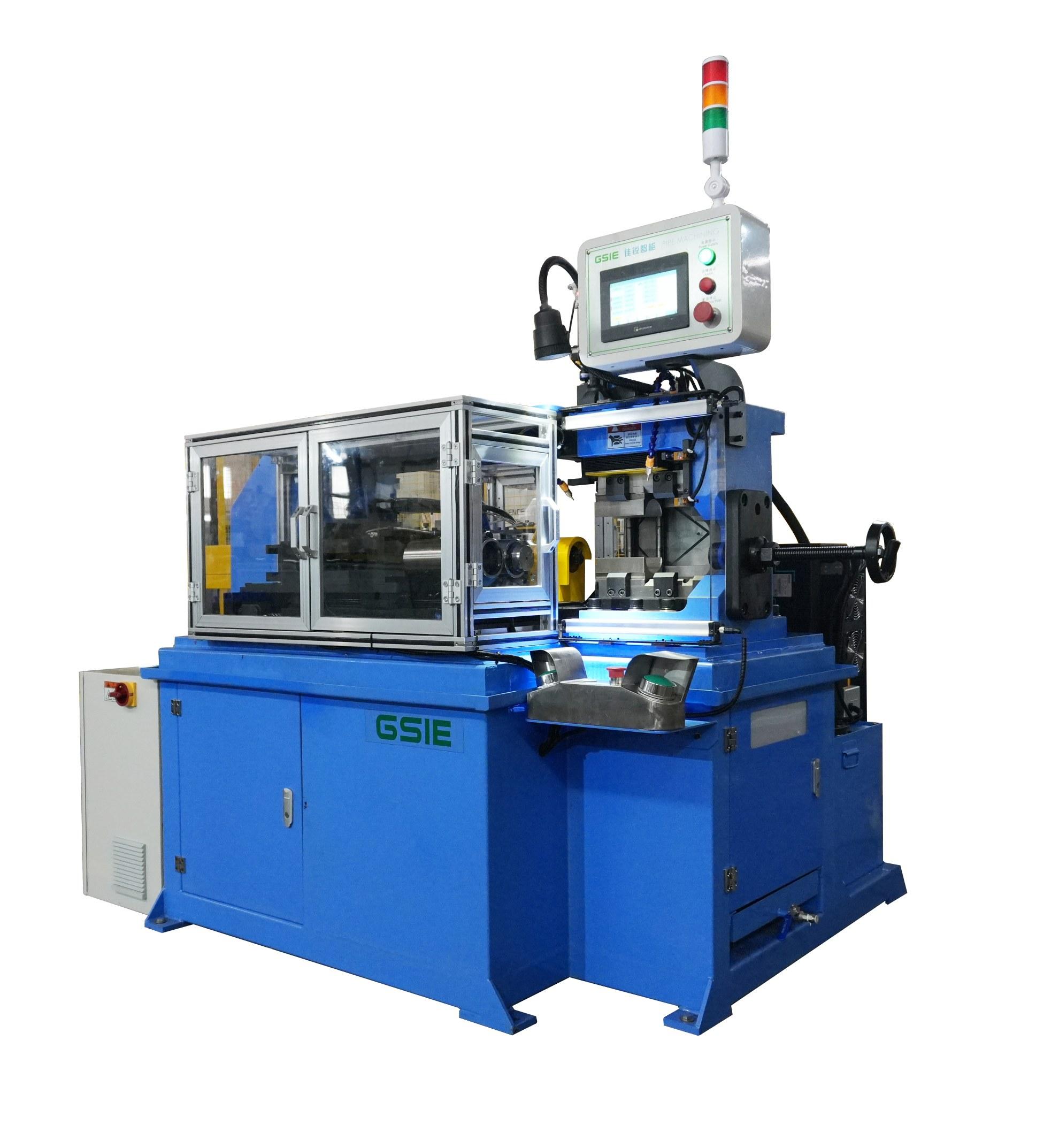
GSIE FM1J-D75-4P tube end forming machine
GSIE's end forming range includes multi-station equipment. The FM1J-D75-4P product description combines single-stroke chamfering with a four-station forming process for steel, copper, aluminum, and other tubes, illustrating why station count should be assessed together with the actual forming sequence.
A double-station design allows two forming operations to be prepared or performed within one machine envelope. Depending on the architecture, the stations may work on separate parts, on opposite ends of one part, or in a sequence that keeps one station active while the other is loaded. This reduces idle time between cycles and can make the machine easier to connect to automatic loading and unloading. It is particularly useful when the forming process has several short steps and the handling time would otherwise represent a large share of total cycle time.
When a supplier calls a machine double-station, confirm how the two stations share the work. Ask whether both stations have independent force and position control, whether they can use different tool sets, and whether they can operate simultaneously. Clarify the actual cycle definition: does it include loading, clamping, lubrication, forming, return, inspection, and unloading? A supplier's theoretical cycle may exclude the movements that determine real output on the shop floor. A production trial with the customer's tube and tooling is the most reliable way to compare alternatives.
Vertical layout: compact and automation-friendly
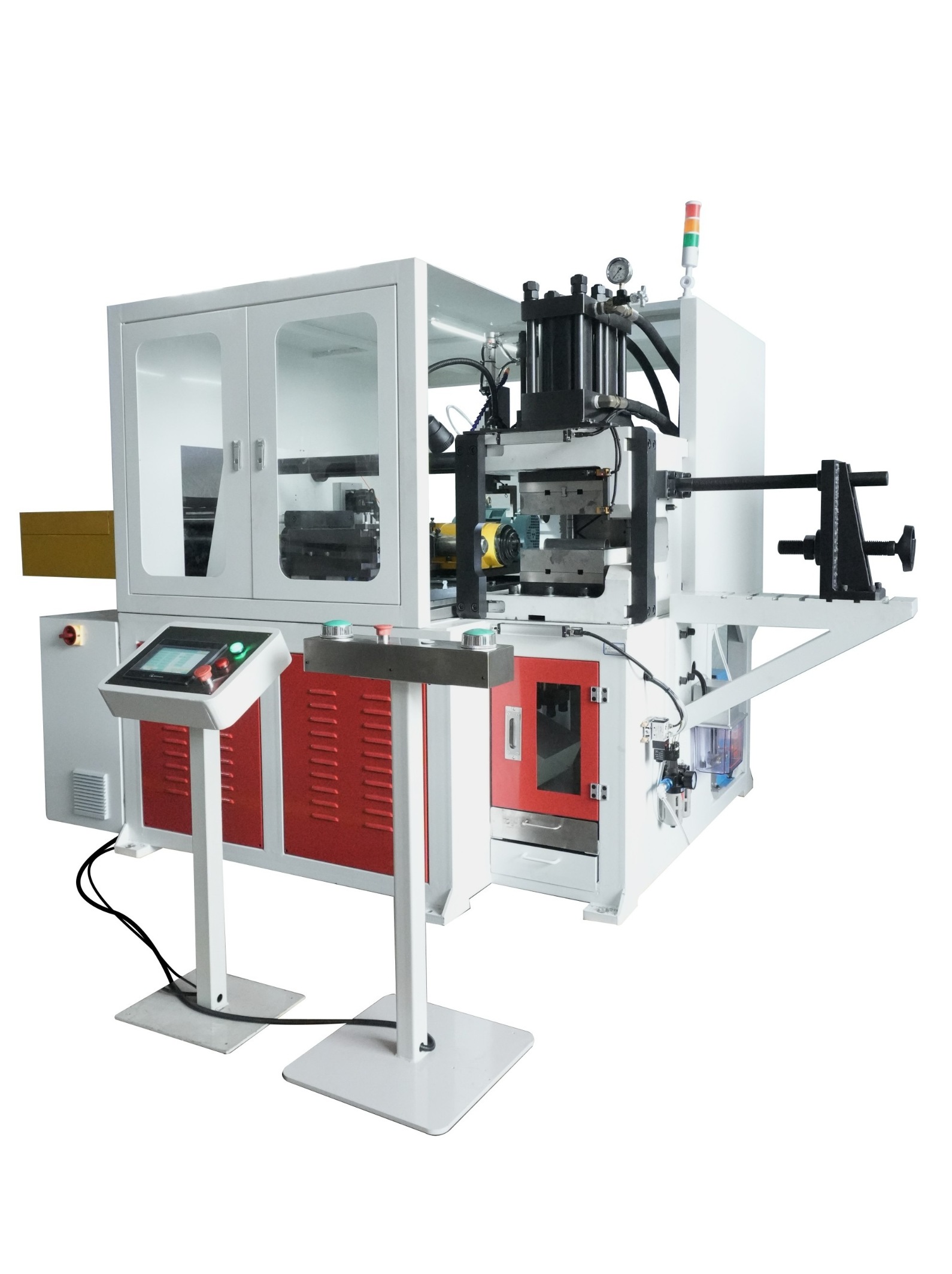
GSIE FDM1J-70-4P tube end forming machine
A vertical double station tube forming machine places the forming heads and workholding arrangement around a vertical axis. This layout can save valuable floor space and often gives the operator a clear view of the forming area. It may also simplify the routing of parts from a robot or a compact transfer unit. When a factory has several processes arranged in a narrow line, the smaller footprint can reduce material travel and make it easier to add inspection, washing, marking, or leak testing nearby.
Vertical machines can be well suited to parts that are loaded from above or held in a stable fixture while the end is formed. Gravity may help with part presentation, although the fixture still needs positive location and clamping. Consider the height of the working envelope and the weight of long tubes. If an unsupported tube extends far beyond the tooling, it may need a steady rest or an additional robot movement to prevent deflection. The design should be assessed with the longest and most flexible part in the product range, not only with a short sample.
Horizontal layout: long parts and straight material flow
A horizontal double-station tube end forming machine can be advantageous when tubes are long, heavy, or naturally transferred along a straight axis. The part can enter the machine from a cutting or bending station and continue to the next process without a major change in orientation. This may simplify conveyor design and make the loading logic familiar to operators who already work with horizontal tube lines.
Horizontal access can also support long tooling packages and large work envelopes. However, the layout may require more floor length, and the machine may need additional support for long tubes. Chip, lubricant, and scrap management should be considered at the design stage. A horizontal arrangement is not automatically slower; it becomes slower only when loading, support, or tool access is poorly coordinated. The relevant comparison is the complete cell cycle and the amount of manual intervention required.
Two ends, one process plan
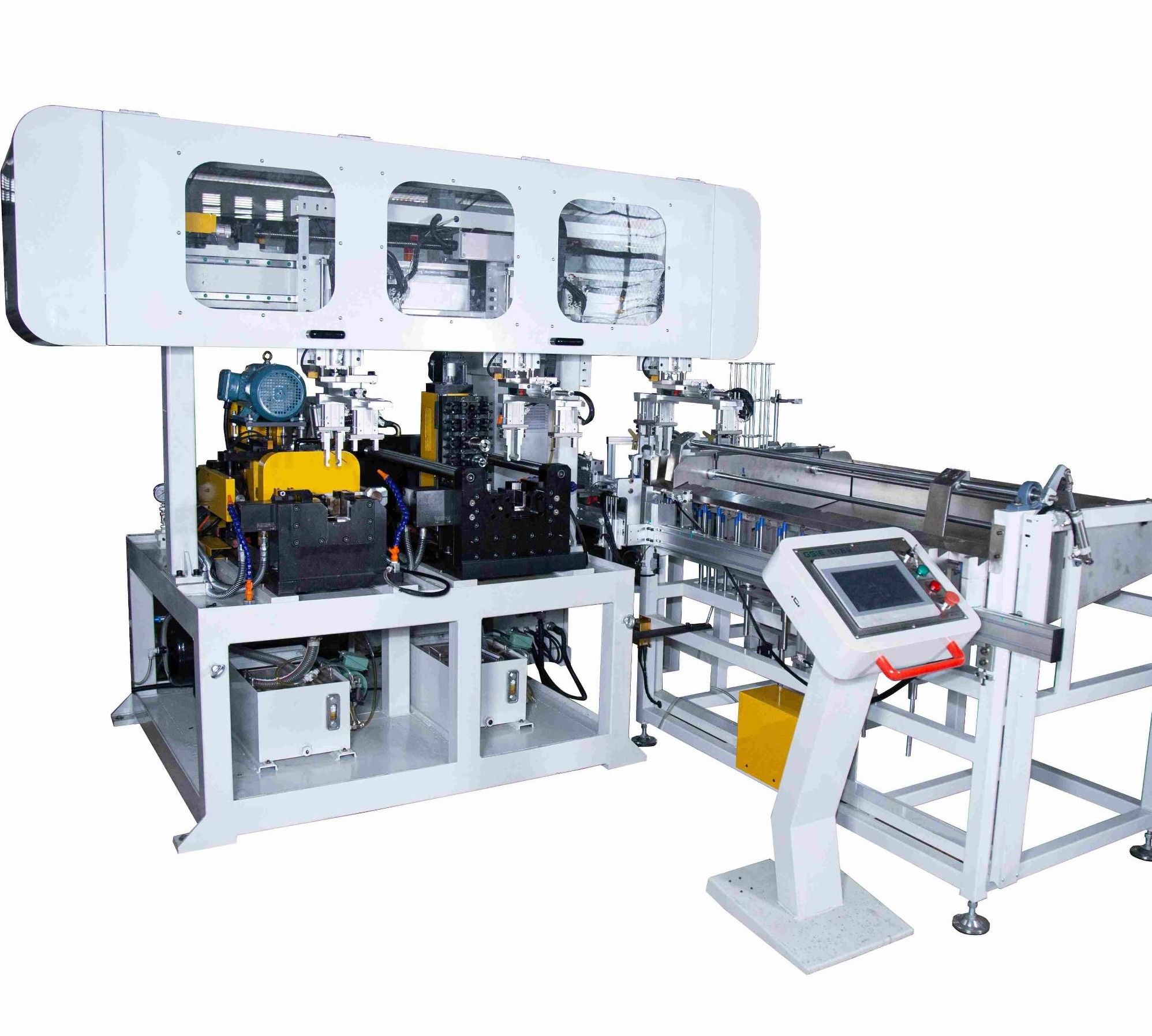
GSIE ZFMS-D20 tube end forming machine
For a part that requires tube end forming on both sides, the machine should be evaluated as a process system. The first end may need a different diameter, length, or profile from the second end. Tool changes, tube rotation, and datum transfer all influence accuracy. A true double-station process can reduce the number of separate fixtures, but only if the part remains correctly referenced as it moves between stations. Ask how the machine compensates for cut-length variation and how it verifies that the first operation is complete before the second begins.
The sequence also matters for downstream assembly. If a formed end is used as a welding or sealing datum, the machine should control axial length and profile position, not simply the final diameter. In-process sensors can monitor force, stroke, and position. A force signature that changes unexpectedly may indicate a wrong tube, a missing tool, material variation, or an obstruction. Recording these values creates an early warning system and helps prevent a full batch from reaching final inspection.
Tooling, changeover, and high product mix
A throughput trial that includes both stations, handling, changeover, and first-pass yield gives the clearest basis for selecting the right layout.
Conclusion
The choice between a vertical and horizontal double-station tube end forming machine should follow the part range and the complete cell cycle. Check how the layout handles long tubes, tool access, changeover, operator movement, and first-pass yield before comparing headline speed.
GSIE, develops tube end forming solutions around real production needs, from multi-station forming to connected cutting, bending, and part handling. Its Tube End Forming Machine, FM1J-D75-4P, CNC Tube & Pipe Bending Machine, and Tube Cutting Machine solutions can be evaluated as one coordinated process.