
Automotive exhaust and chassis piping is difficult to produce consistently because the tube is usually thin-walled, the geometry is three-dimensional, and the part must fit a crowded vehicle package. A suitable machine therefore has to do more than bend a tube to a programmed angle. It must control ovality, wall thinning, springback, collision clearance, part handling, and changeover time while maintaining a stable process over thousands of parts. For manufacturers evaluating automotive tube bending machinery, the right decision starts with the part family and the production strategy, then moves to machine architecture, tooling, automation, and service support.
Start with the material and geometry
Before comparing machine brochures, define the complete range of tubes that the line will process. Exhaust systems may use stainless steel, aluminized steel, or other corrosion-resistant alloys, while chassis and body structures may use high-strength steel or aluminum. Record outside diameter, wall thickness, centerline radius, straight lengths, maximum bend angle, bend direction, and the distance between adjacent bends. Also identify whether the design includes tight radii, compound bends, short tangent lengths, or multiple planes. These details determine whether a standard tube bending machine is sufficient or whether a mandrel, pressure die, wiper die, or rotary booster arrangement is required.
A part that looks simple in a two-dimensional drawing may be challenging after tolerances and fixture access are considered. Automotive tubes are often designed around engines, batteries, suspension components, and heat shields. The bending process must preserve a usable internal diameter and a predictable external profile so that clamps, brackets, sensors, and downstream welding fixtures locate correctly. A supplier should be able to review sample CAD files, simulate the bend sequence, and explain the expected limits before the buyer commits to equipment.
Why CNC control matters in automotive production
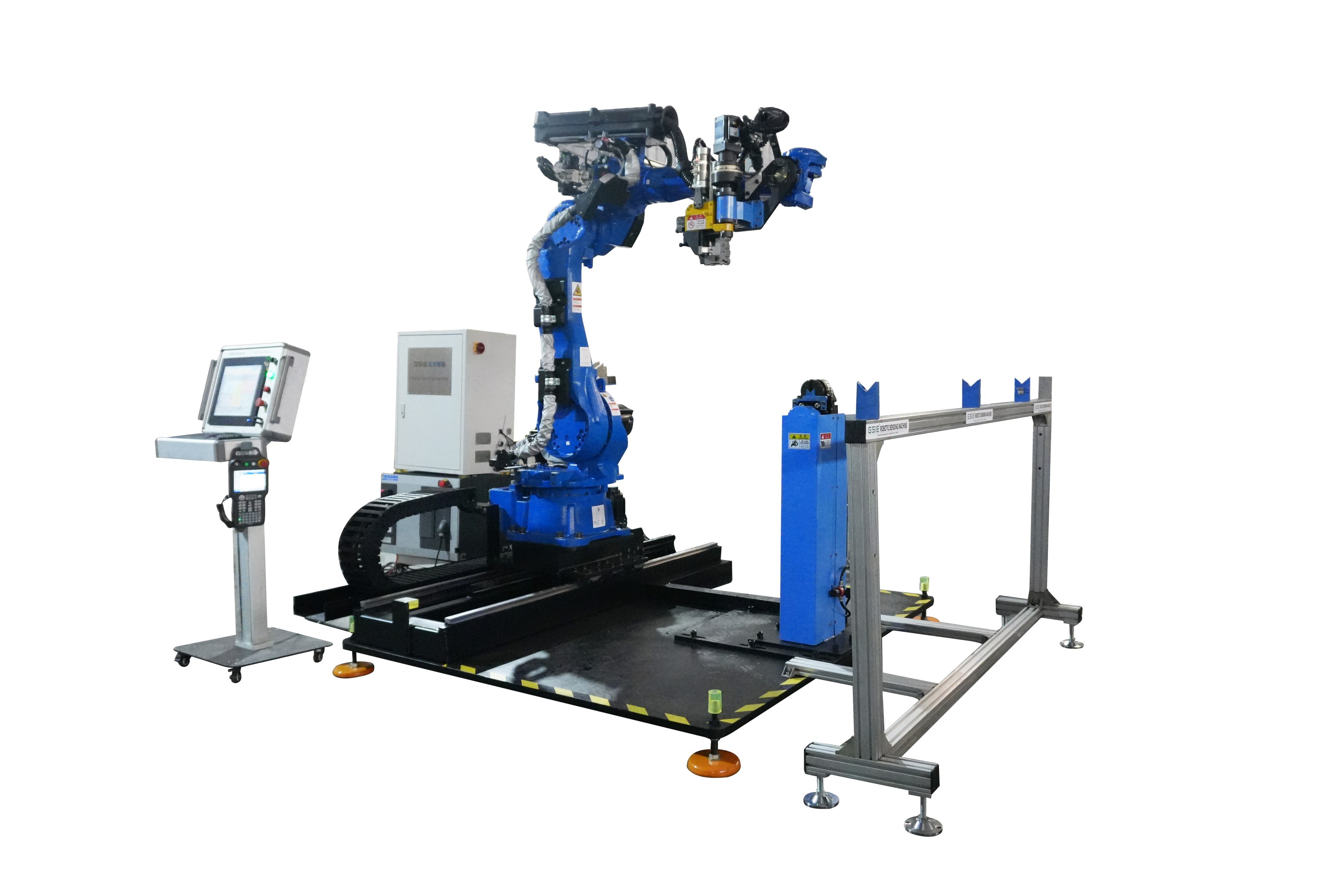
GSIE Robot Bending Machine
On GSIE's current product pages, the E BEND-38RL is described as an all-electric left/right CNC pipe bender with a full servo-driven 9-axis control system. That makes it a useful reference point when comparing axis control and automation readiness for automotive work.
A modern CNC bending machine coordinates several axes so the tube can rotate, advance, and bend in a controlled sequence. This is especially important for chassis piping and exhaust assemblies with several bends in different planes. CNC programming stores repeatable recipes, supports quick corrections, and reduces dependence on manual measurement. When combined with automatic tube loading and unloading, the machine can maintain a consistent cycle and give operators more time for quality checks and material preparation.
An all-electric multi-axis platform can bring additional control to high-volume and high-mix work. Electric drives make motion profiles easier to tune, provide clean feedback for position monitoring, and reduce the variation that can occur when hydraulic performance changes with temperature or maintenance condition. The important point is not the axis count by itself. The machine should use its axes to improve tube rotation accuracy, bend synchronization, collision avoidance, and access to different product geometries. A nine-axis configuration is valuable when it shortens handling steps and allows several operations to be completed without manual repositioning.
Mandrel bending and exhaust quality
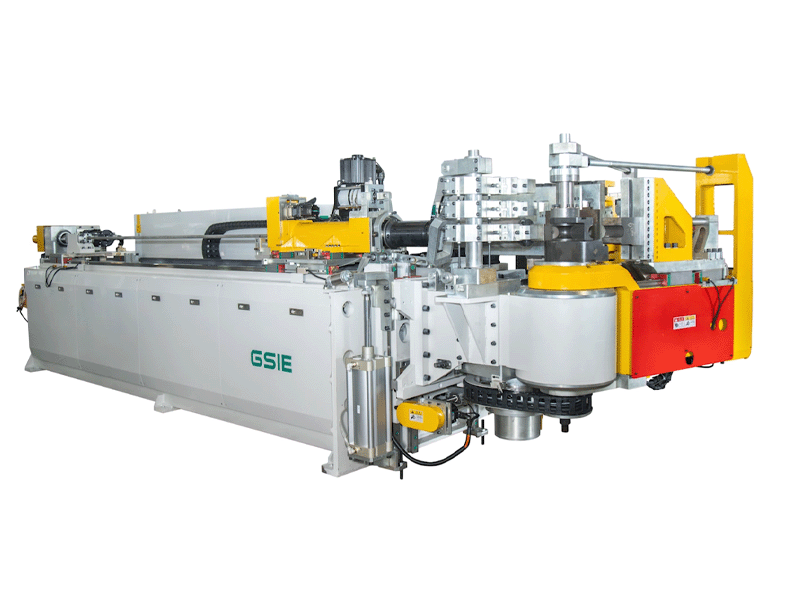
GSIE E-BEND-90 pipe bending machine
For many exhaust parts, a CNC mandrel tube bender is the preferred solution when the radius is tight or the tube wall is relatively thin. The mandrel supports the tube during bending and helps limit wrinkling, flattening, and excessive wall thinning. A wiper die can further control the inside of a tight bend, while a pressure die and booster can help maintain the desired shape. These tools are not automatically required for every part, so the selection should be based on actual material, radius, and quality requirements rather than on a generic specification.
An exhaust bender should also be evaluated for the work that follows bending. The finished tube may need flaring, beading, slotting, piercing, end forming, or robotic welding. A reliable process plan considers datum locations and whether the tube will be transferred directly to the next station. The more accurately the bending machine controls the final position, the less adjustment will be needed in fixtures and welding cells. Suppliers that understand the full tube route can often identify opportunities to combine handling and reduce accumulated tolerance.
Robotic integration and flexible production
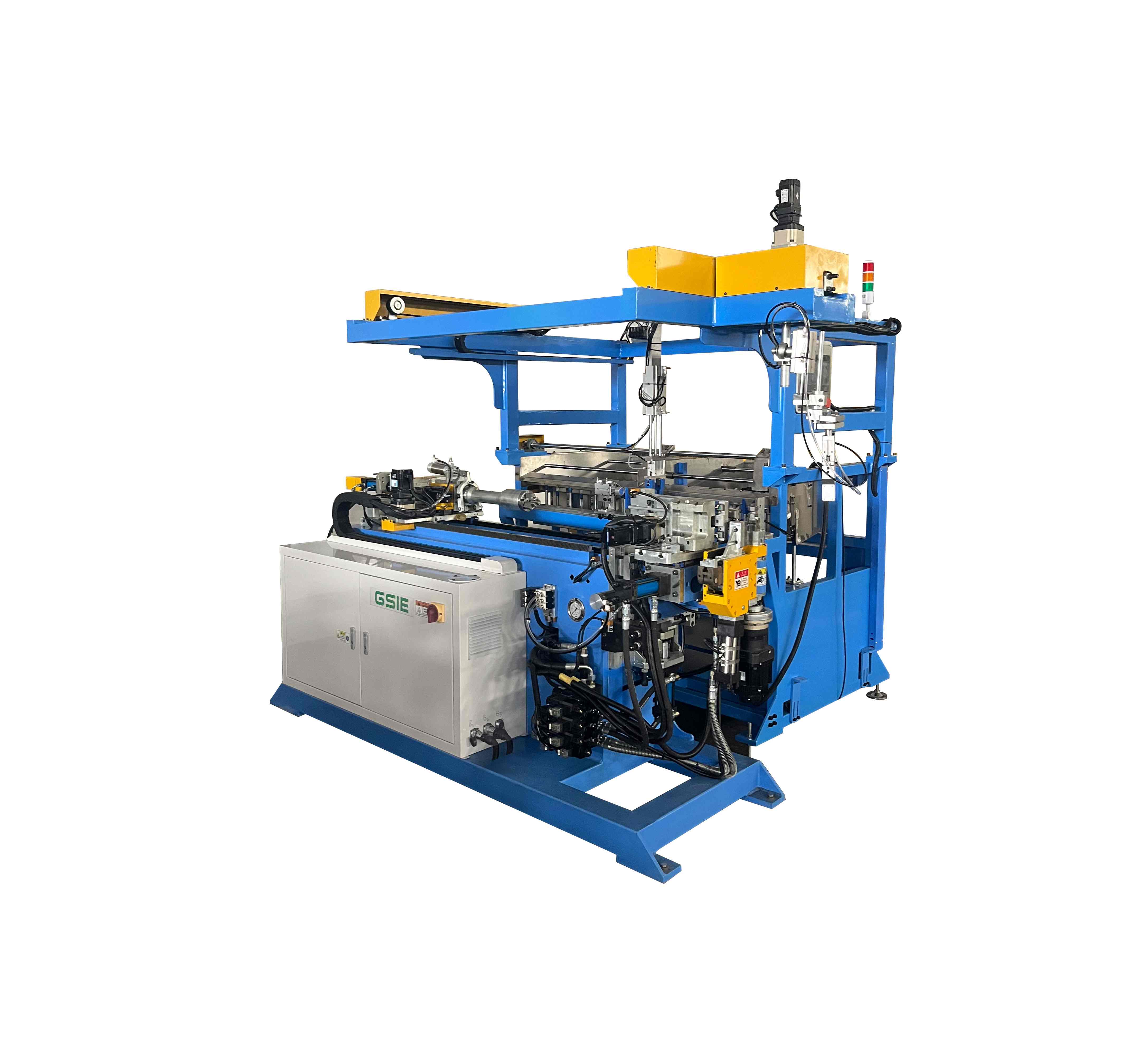
GSIE CNC pipe bending equipment
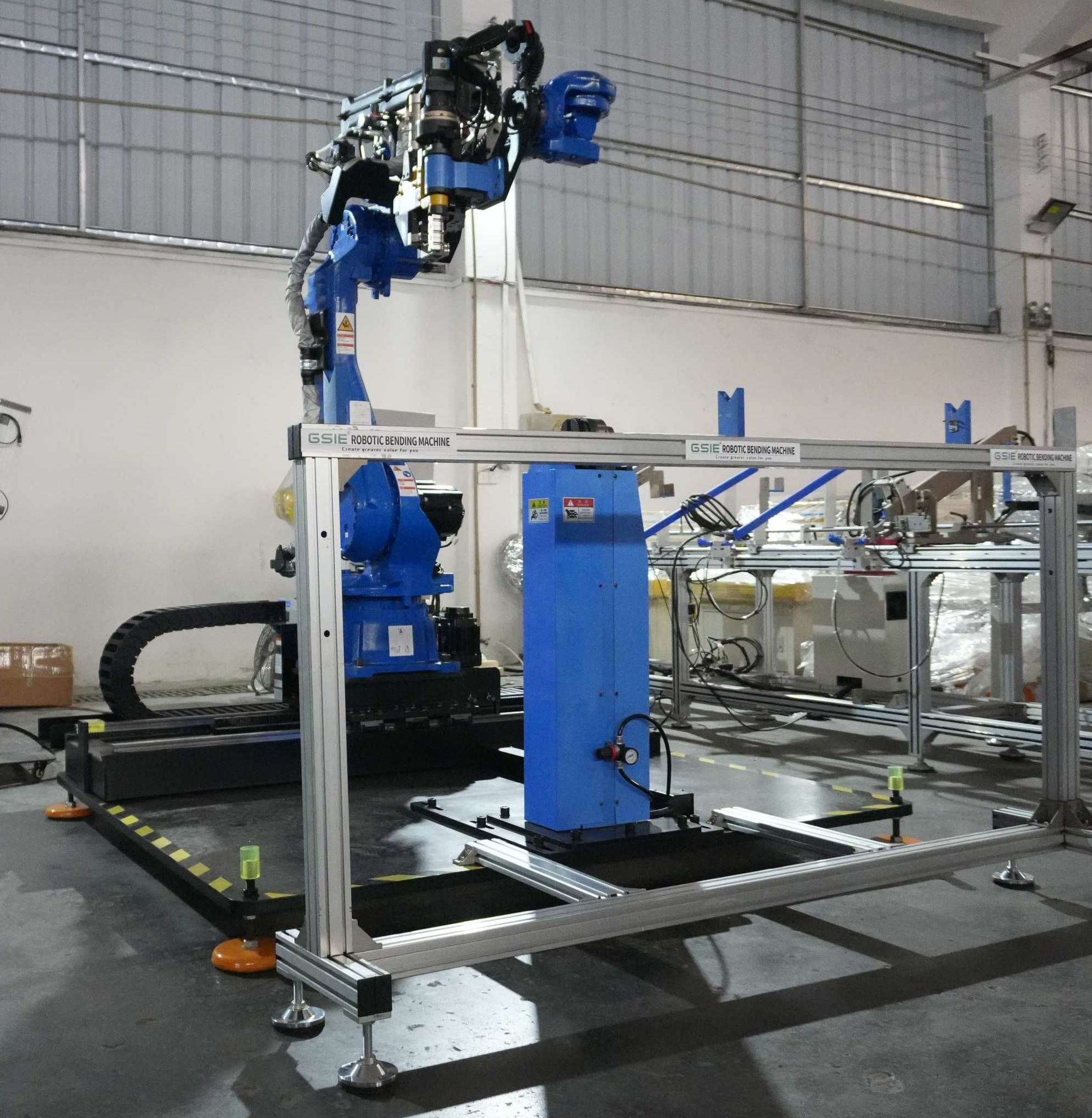
Automation is most effective when it removes repeated handling and makes process data visible. A robot can load cut lengths, orient tubes, transfer bent parts to inspection or end forming, and separate accepted and rejected components. Vision or barcode verification can confirm the correct tube and recipe before the cycle begins. For high-mix production, quick-change grippers and standardized interfaces are as important as robot speed. The objective is a repeatable flow across many part numbers, not simply a faster individual motion. In some cells, an automatic pipe bender can also share loading and recipe signals with the surrounding equipment.
Ask how the CNC bending machine communicates with robots, tube cutting systems, end forming stations, and the plant production system. Useful interfaces may include recipe selection, cycle-complete signals, alarm reporting, traceability fields, and measurement feedback. A line that can record tube lot, program version, operator, and correction history makes root-cause analysis much faster. It also helps production teams distinguish a material issue from a tooling issue or a programming issue.
Conclusion
Choosing a CNC tube bending machine for automotive exhaust and chassis piping starts with the part range, not a single specification. Material, radius, wall thickness, bend sequence, tooling, and automation all need to work together for stable production.
GSIE, the JIARUI brand, brings these capabilities together through its CNC Tube & Pipe Bending Machine range, the E BEND-38RL, robot pipe bending solutions, and fully automatic production lines. Its engineering background and support team are available through GSIE's engineering background and Contact Us.