
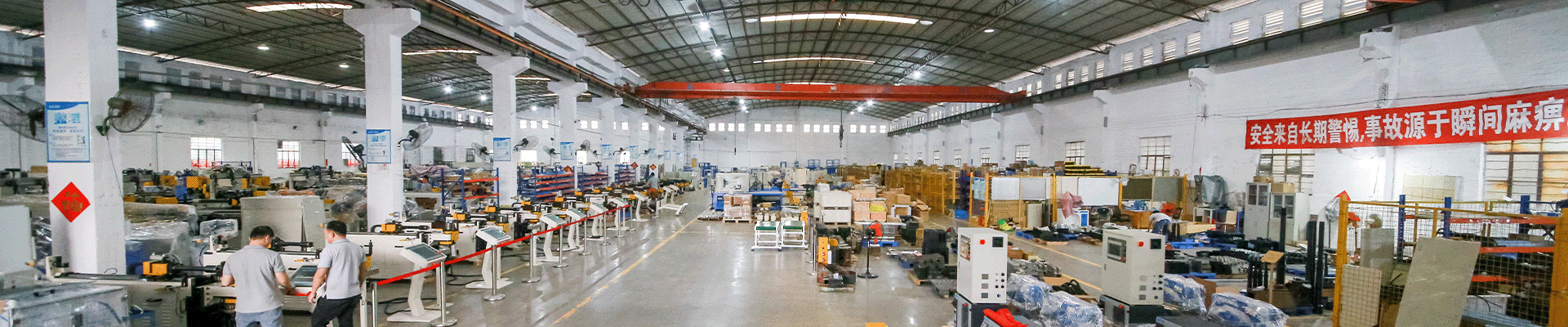
In today's manufacturing landscape, precision tube processing is essential for creating strong, reliable components across many sectors. As a high-tech enterprise with nearly 20 years of integrated R&D, production, sales, and technical service expertise, GSIE (JiaRui) delivers advanced solutions like full electric nine-axis CNC tube benders, robot bending machines, internal high-pressure forming auxiliary equipment, and fully automatic integrated production lines. Our China CNC pipe bender with intelligent process planning and strong intelligent equipment empowers manufacturers to achieve superior results with high automation and technical thresholds.
What Are Tube Bending Machines?
Tube bending machines shape straight tubes or pipes into precise angles and curves without compromising structural integrity. These versatile systems, also known as pipe and tube bender, bender for pipe, or simply CNC bending machine, use controlled force to form metal, copper, or even plastic pipes to exact specifications. Modern versions like our CNC tube bending machine and CNC pipe bending machine integrate advanced controls for repeatability and efficiency.
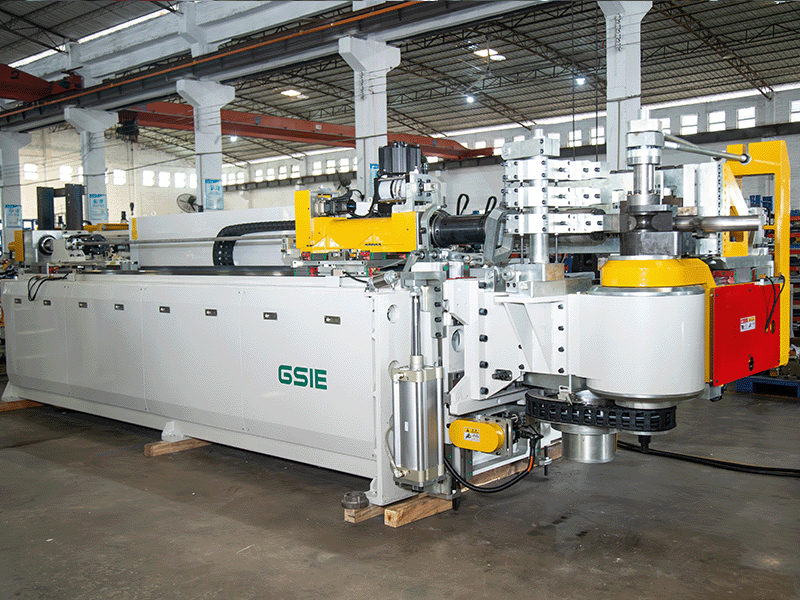
Standard Pipe Bending Machine E-BEND-90
What Are Tube Bending Machines Used For in Industry?
Tube bending machines serve critical roles in creating complex geometries for functional and structural parts. Key applications include:
- Automotive and transportation: Exhaust systems, fuel lines, and chassis components.
- HVAC and refrigeration: Coils and piping for efficient heat exchange.
- Furniture and consumer goods: Curved frames for chairs, tables, and displays.
- Medical devices: Precision tubing for equipment and implants.
- Aerospace and marine: Lightweight yet strong structural elements.
- Industrial machinery: Hydraulic lines and protective frameworks.
These uses highlight why manufacturers turn to reliable CNC tube bending machine manufacturers for consistent quality.
Why Choose a High-Precision CNC Pipe Bending Machine for Modern Production?
High-precision CNC bending machine technology stands out in competitive markets for its accuracy, speed, and flexibility. GSIE solutions minimize material waste and ensure tight tolerances, making them ideal for high-volume or custom production.
How to bend tube with a pipe bender accurately using CNC technology?
- Design the part: Use CAD software to define bend angles, radii, and sequence.
- Select tooling: Match mandrels, dies, and wipers to tube diameter and material.
- Load and program: Input parameters into the CNC control; our intelligent process planning automates optimization.
- Execute bends: The machine follows the program, applying controlled pressure for smooth curves.
- Inspect: Built-in sensors verify dimensions and surface quality.
For tight radii, a CNC mandrel tube bender supports the inside of the tube to prevent collapse. Larger diameter pipes may use alternative forming methods for stability. Material matters too: a metal tube bending machine handles steel with robust power, while a copper tube bending machine requires gentler handling to preserve conductivity. For plastics, a PVC pipe bending machine uses heat or specialized forming to avoid deformation.
This contrast ensures the right exhaust bender or general system meets specific production needs while maintaining structural integrity in heavy-duty applications.
Where Are Tube Bending Machines Used?
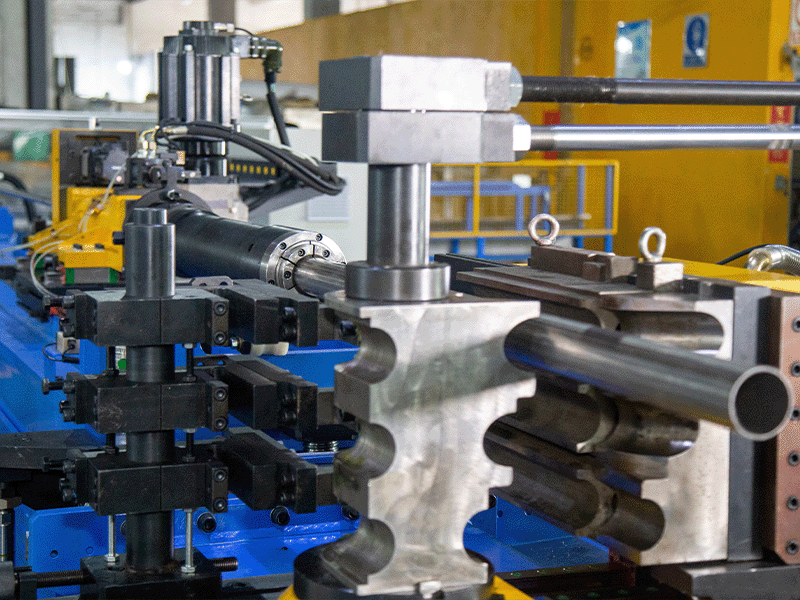
Standard Pipe Bending Machine SKW-50
The applications are extremely wide-ranging. Tube bending technology supports many sectors with precision-formed parts.
Automotive & EV
Used in the production of:
- Exhaust systems
- Fuel lines
- Cooling circuits
- Structural components for electric vehicle frames
An exhaust bender handles complex 3D geometry while GSIE's robot-integrated solutions excel with lightweight, high-strength parts. Precision remains key in this fast-evolving sector.
HVAC & Refrigeration
Specialized copper tube bending machine technology produces accurate coils and connections that optimize performance in air conditioning and refrigeration systems.
Furniture & Medical
Widely used in:
- Chairs
- Tables
- Decorative structures
Aesthetic smooth bends matter greatly for visual appeal, while medical devices demand extreme accuracy for safety in critical tubing.
Additional areas include shipbuilding, aviation equipment, liquid cooling system piping, and sports equipment. GSIE's full range of tube processing technologies — including laser processing and AI intelligent inspection — delivers reliable results wherever strong, precise bends are needed. If you want to know whether your industry should move toward this solution, our team offers guidance based on real production needs.
How Do Tube Tending Machines Work?
These machines apply force through dies or rollers while supporting the tube to control deformation. CNC models use servo motors and software for multi-axis movement, enabling intricate 3D bends in one setup. Advanced systems incorporate sensors for real-time adjustments.
Types of Tube Bending Machines in GSIE(Jiarui)
GSIE offers a comprehensive lineup tailored to different needs:
CNC Tube & Pipe Bending Machine: Versatile for standard to complex jobs:
- Standard Pipe Bending Machine: Reliable entry-level option for basic applications.
- Left-Right Integrated Pipe Bending Machine: Allows bending in multiple directions without repositioning.
- Robot Pipe Bending Machine: Combines robotic arms for ultimate flexibility.
- Cutting End Integrated Machine: Performs bending and end-forming in one process.
- Robot Busbar Bending Automatic Line: Fully automated for high-efficiency production.
The Role of the Robot Bending Machine in Industry 4.0
The robot bending machine represents a leap forward in smart manufacturing. GSIE showcased its proprietary robot-integrated tube bender at Tube & Wire 2026, demonstrating seamless integration with loading/unloading robots. This setup enables 24/7 production, full digital control, and reduced labor dependency. Combined with AI intelligent inspection and flexible production lines, it supports the transition to fully connected factories.
How to Choose the Right CNC Bending Machine?
Selecting the ideal CNC bending machine depends on several practical factors:
- Type of material (steel, copper, PVC, or alloys)
- Tube diameter and wall thickness
- Production volume and required speed
- Complexity of curves and radii
- Level of automation needed
Each application requires a tailored solution. Revisit the how to bend tube with a pipe bender steps for best practices. A CNC mandrel tube bender suits tight radii on thinner tubes, while heavier setups work better for larger diameter pipes. Material-specific needs are important — gentle tooling in a PVC pipe bending machine prevents deformation, whereas reinforced support maintains structural integrity in heavy-duty steel applications.
GSIE experts provide pre-sales consultation to match equipment perfectly to your operations.
Partnering With a Global Pipe Bending Machine Supplier
As a dependable pipe bending machine supplier, GSIE (JiaRui) brings nearly 20 years of experience since 2005. We specialize in CNC tube and pipe bending machines, tube end forming, crimping, frame welding auxiliaries, internal high-pressure forming, laser processing, AI intelligent inspection equipment, and robotic automated flexible production line manufacturing technology.
Our solutions serve automotive piping, electric vehicle frames, air conditioning and refrigeration, medical devices, aviation equipment, liquid cooling systems, furniture, shipbuilding, marine engineering, and sports equipment. Distributors gain high-quality technical support, training, and access to cutting-edge systems that strengthen their market position.
Tube Bending and Industrial Automation
Combining tube bending with robotics and full automation creates efficient, scalable production. GSIE's full electric nine-axis CNC systems and one-stop solutions minimize downtime and maximize precision for modern factories.
FAQs
Q1: What are tube bending machines used for?
A: They create precise bends in tubes and pipes for components across many industrial applications.
Q2: Which sectors use these machines?
A: Automotive, HVAC, furniture, medical, aviation, marine, and more.
Q3: What is the advantage of bending over welding?
A: Bending delivers greater structural strength with fewer joints and potential weak points.
Q4: Are CNC machines better?
A: Yes. They provide outstanding precision, repeatability, and automation benefits.
Q5: Can the process be fully automated?
A: Yes. GSIE's fully automatic production lines and robot bending machines enable complete integration with minimal human intervention.
Q6: What materials can be processed?
A: Metals (steel, stainless, aluminum), copper, specialized alloys, and plastics such as PVC.
Q7: Is it possible to fully automate the process?
A: Yes. Many modern solutions allow full integration with automatic systems.
Conclusion
From basic shaping to fully automated lines, pipe bending machines drive innovation across industries. GSIE (JiaRui) offers the right CNC pipe bending machine or complete system for your needs. Contact us today to explore how our China CNC pipe bender with intelligent process planning and expert support can benefit your business. Partner with a proven leader for reliable tube processing solutions.