
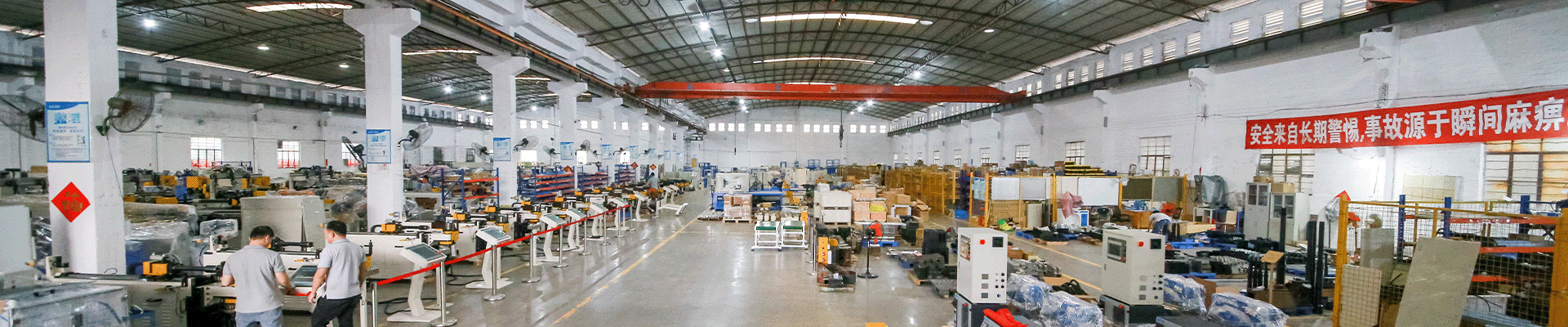
Industrial tube processing does not stop at making a clean bend. For many manufacturers, the harder question is whether a pipe bending machine can hold accuracy as tube diameter, wall thickness, material strength, and production volume increase. Heavy-duty CNC pipe bending machines are selected for larger pipe capacity, servo-controlled movement, repeat production, and wider tube processing workflows.
For B2B buyers in automotive piping, chassis parts, HVAC and refrigeration, furniture, industrial equipment, and metal fabrication, the right machine is not simply the largest model available. It is the model whose capacity, axis control, bending direction, and automation fit the actual pipe part.
What Makes a CNC Pipe Bending Machine Heavy Duty
A heavy-duty CNC pipe bending machine is defined first by the pipe it can process. Diameter and wall thickness decide the forming load, while material decides how much resistance the machine must manage during bending. Capacity data should therefore be read together with the material named for that model.
In GSIE's bending equipment range, buyers can compare heavy-capacity models within the CNC Tube and Pipe Bending Machine series, covering standard pipe bending machines, left-right integrated machines, robot pipe bending machines, cutting end integrated machines, and robot busbar bending automatic lines.
Key Features to Check Before Choosing a Heavy Duty CNC Pipe Bender
Maximum pipe diameter and wall thickness. Capacity should be checked before any discussion of automation. SKW-65 is specified for Ф65X2.0 carbon steel, SKW-50 for Ф50X2.0 iron pipe, and E-BEND-90 for Ф90X2.0 carbon steel. These figures help buyers separate medium-diameter work from large pipe bending needs.
Material compatibility. A machine named for one capacity may not mean the same capacity across all materials. Carbon steel capacity, iron pipe capacity, stainless steel capacity, and copper-aluminum capacity should be treated as different selection conditions, especially for parts that require stable repeat geometry.
Four-to-six axis servo control. SKW-50 and SKW-65 use four-to-six axis precision servo control covering the bending crankshaft, feed shaft, rotation shaft, auxiliary push shaft or lift shaft, and translation shaft. For production parts with several bends, feeding, rotation, and auxiliary support influence the final pipe shape.
Stability for repeat production. GSIE positions its CNC tube bender machines for high efficiency, precision, fully automated production, and consistent accuracy and stability. For B2B buyers, this affects batch consistency, fixture planning, operator workload, and downstream connection.
Common Industrial Applications
Heavy-duty CNC pipe bending machines are most relevant when parts combine pipe strength, dimensional control, and repeatable production. GSIE tube processing machinery is used in automotive piping, electric vehicle frames, air conditioning and refrigeration, medical devices, aviation equipment, liquid cooling system piping, furniture, shipbuilding, marine heavy engineering, and sports equipment.
Automotive exhaust and chassis piping often require stable multi-angle bends and controlled part geometry. HVAC and refrigeration manufacturers need efficient tube forming, while industrial equipment and metal fabrication buyers may need stronger pipe materials or larger diameters.
GSIE Heavy Duty CNC Pipe Bending Machine Options
The SKW-65 CNC tube bending machine is a practical choice when the part moves into heavier carbon steel tube work. Its maximum capacity is Ф65X2.0 carbon steel, and its four-to-six axis precision servo control includes bending, feeding, rotation, auxiliary push or lift, and translation movement.
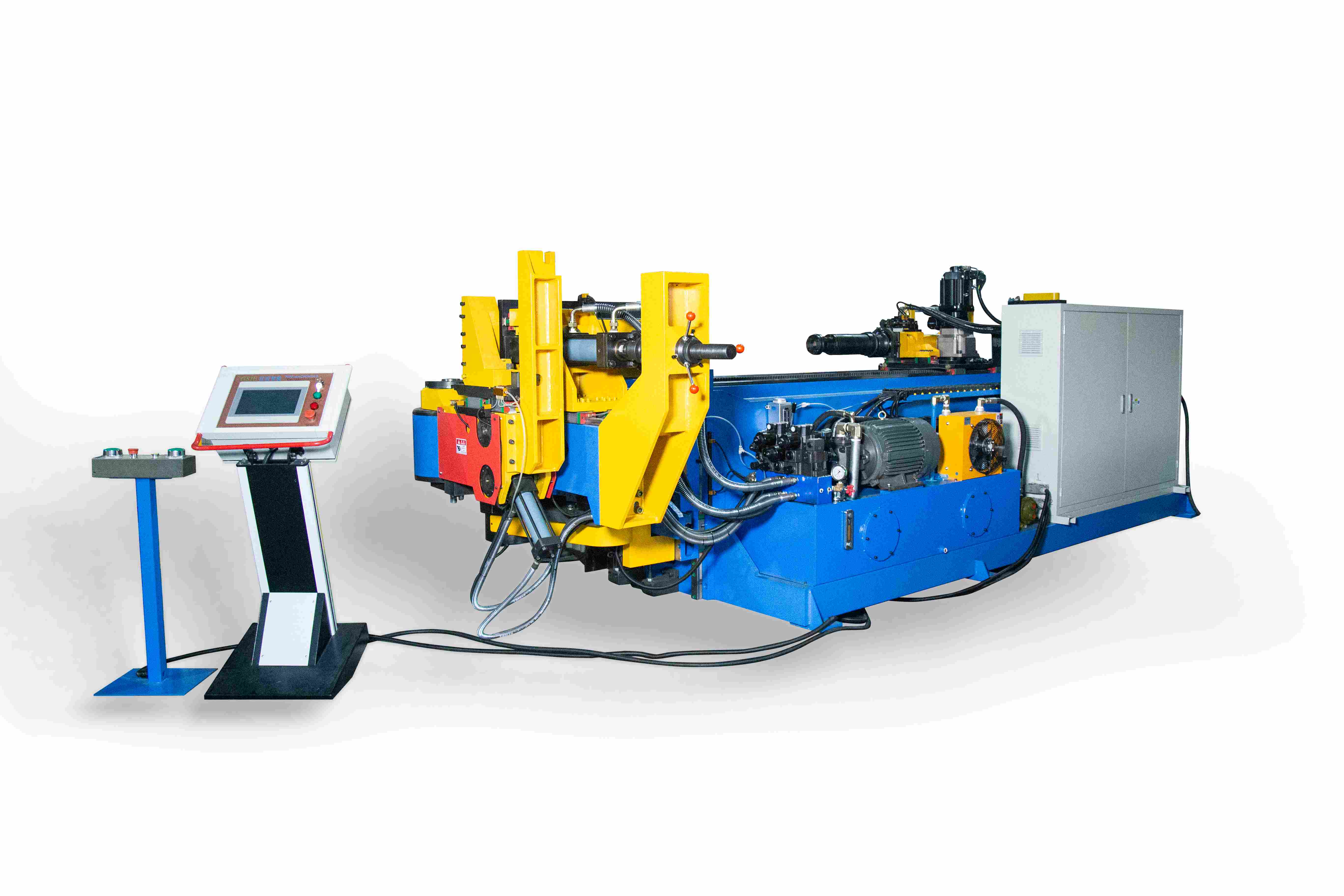
For medium-diameter pipe processing, the SKW-50 CNC tube bending machine supports Ф50X2.0 iron pipe and uses the same four-to-six axis precision servo control structure. This makes it suitable for manufacturers that need controlled bending, feeding, and rotation without moving to the larger capacity of SKW-65 or E-BEND-90.
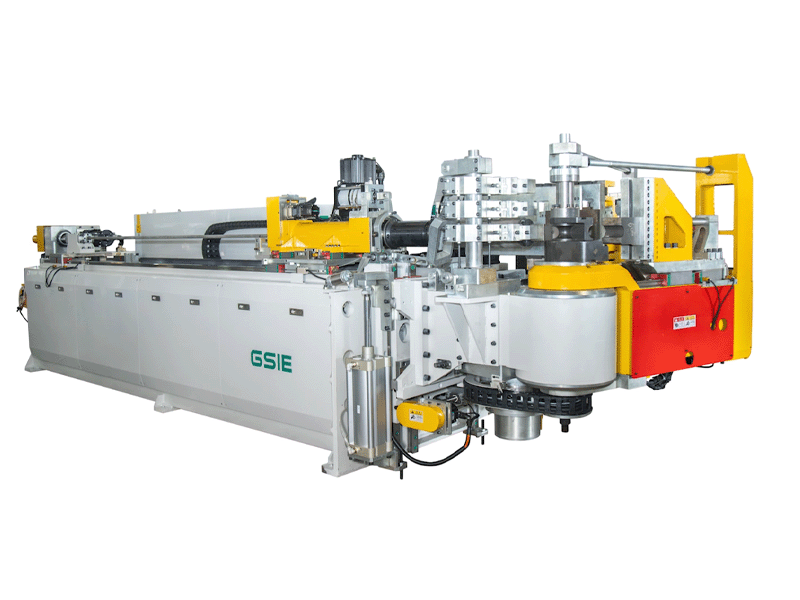
When large pipe capacity and electric control are central to the project, E-BEND-90 reaches Ф90X2.0 carbon steel, uses nine controlled axes, and supports right or left bending with multi bend radius capability. This model is relevant for buyers comparing a large pipe bending machine for heavier industrial applications.
Heavy Duty CNC Pipe Bender vs Standard Pipe Bending Machine
A standard pipe bending machine is appropriate when the project centers on smaller tube diameters, fast operation, easy handling, and stable bending for parts such as HVAC systems, automotive components, and other industrial applications. Heavy-duty CNC pipe bending machines become the better fit when pipe diameter, material load, bend complexity, or automation requirements move beyond small tube processing.
Selection should start from the part drawing rather than from a general machine category. Buyers should confirm tube outside diameter, wall thickness, material, bend radius, number of bends, bending direction, expected production volume, and whether the bending machine will operate alone or as part of a connected production line.
SKW-50 CNC tube bending machine for medium-diameter Ф50X2.0 iron pipe processing
Model Comparison for Early Selection
|
Model |
Capacity |
Control or Structure |
Selection Logic |
|
SKW-50 |
Ф50X2.0 iron pipe |
Four-to-six axis precision servo control |
Medium-diameter tube bending with repeat output. |
|
SKW-65 |
Ф65X2.0 carbon steel |
Four-to-six axis precision servo control |
Heavier pipe forming with servo-controlled motion. |
|
E-BEND-90 |
Ф90X2.0 carbon steel |
All-electric, 9 axes, right or left bending |
Large-capacity work with flexible bending direction. |
Heavy Duty CNC Pipe Bender vs Standard Pipe Bending Machine
A standard pipe bending machine is appropriate when the project centers on smaller tube diameters, fast operation, easy handling, and stable bending for parts such as HVAC systems, automotive components, and other industrial applications. Heavy-duty CNC pipe bending machines become the better fit when pipe diameter, material load, bend complexity, or automation requirements move beyond small tube processing.
Selection should start from the part drawing rather than from a general machine category. Buyers should confirm tube outside diameter, wall thickness, material, bend radius, number of bends, bending direction, expected production volume, and whether the bending machine will operate alone or as part of a connected production line.
Model Comparison for Early Selection
|
Model |
Capacity |
Control or Structure |
Selection Logic |
|
SKW-50 |
Ф50X2.0 iron pipe |
Four-to-six axis precision servo control |
Medium-diameter tube bending with repeat output. |
|
SKW-65 |
Ф65X2.0 carbon steel |
Four-to-six axis precision servo control |
Heavier pipe forming with servo-controlled motion. |
|
E-BEND-90 |
Ф90X2.0 carbon steel |
All-electric, 9 axes, right or left bending |
Large-capacity work with flexible bending direction. |
How to Choose the Right Heavy Duty CNC Pipe Bending Machine
A good selection process begins with the pipe material and the maximum required diameter. If the work centers on Ф50X2.0 iron pipe, SKW-50 is the more direct comparison point. If the requirement moves to Ф65X2.0 carbon steel, SKW-65 provides the heavier capacity. If the project requires Ф90X2.0 carbon steel, left or right bending, and nine controlled axes, E-BEND-90 becomes the relevant large-capacity option.
The next step is motion control. Four-to-six axis servo control is valuable for coordinated bending, feeding, rotation, auxiliary support, and translation. For complex bending direction requirements, all-electric control and left-right bending can become more important than capacity alone.
Finally, buyers should consider the production line. GSIE equipment can connect with automated loading, unloading, and continuous processing in complex production lines, so integration may influence the final model choice as much as bending capacity.
FAQ
What pipe capacity should I check first?
Start with the exact pipe material, outside diameter, and wall thickness. For example, SKW-65 is specified for Ф65X2.0 carbon steel, SKW-50 for Ф50X2.0 iron pipe, and E-BEND-90 for Ф90X2.0 carbon steel.
Is a heavy-duty CNC pipe bender always better than a standard machine?
No. A standard pipe bending machine can be the right choice for small diameter tube processing where fast operation, easy handling, precision, and stable performance are the main needs. Heavy-duty models are selected when capacity, material load, controlled axes, or bend complexity require them.
Can a CNC pipe bending machine fit into an automated production line?
Yes. GSIE tube bending solutions are engineered for integration with complex production lines and can support automated loading, unloading, and continuous processing depending on the production plan.
Conclusion
Heavy-duty CNC pipe bending machines help manufacturers process stronger materials, larger pipe sizes, and demanding bend programs with controlled, repeatable motion. SKW-50, SKW-65, and E-BEND-90 give buyers clear comparison points across Ф50, Ф65, and Ф90 capacity ranges. For industrial tube processing projects that need reliable bending equipment and practical automation planning, GSIE can support model selection around the actual pipe material, bending geometry, and production workflow.